
The newest advocacy tactic on the field is not just about getting supporters to post on social media. It is about turning every action into a flywheel: public pressure, supporter identity, campaign traffic, and supporter acquisition.
What is Social Media Advocacy?
Social Media Advocacy is a new digital advocacy tactic that turns supporter actions into public posts that tag or hashtag decision-makers on platforms like Instagram, Bluesky, X, Facebook, and Threads.
Instead of sending pressure only through private channels, it puts campaign messages directly into the public feeds, mentions, and conversations where politicians, staffers, journalists, and supporters are already paying attention.
The early performance data is promising.
One campaign had an impressive 57.7 clicks per 100 posts. In other words, the posts were not only tagging representatives where we know they are paying attention.
They were driving measurable traffic (and new supporters) back into the campaign.
There is also a media value story here.
Based on average industry cost per view or click, every 500 Social Media Advocacy supporter posts generate approximately $1,619.72 in equivalent paid media value.
But the deeper value is not just media value.
-
Paid ads do not create supporter identity.
-
Paid ads do not put real constituents’ names and voices into a representative’s mentions.
-
Paid ads do not create the same visible wave of public accountability.
-
Paid ads do not organically grow your email list and social following with every action.
This is campaigning in public, and it creates a ‘Social Media Advocacy Flywheel’.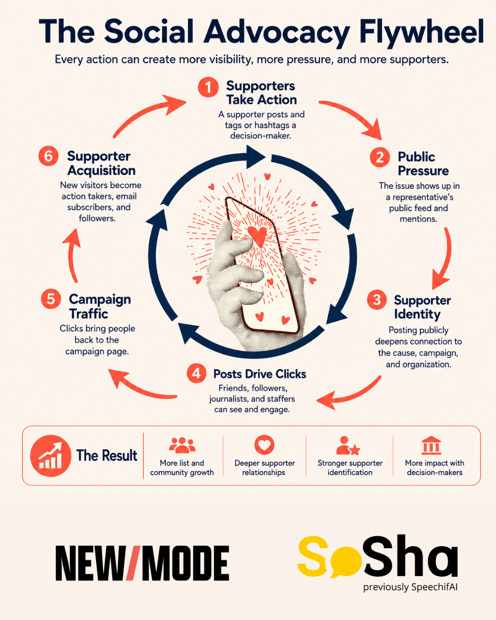
1. Supporters take action
Supporters take action. They post a message on Instagram, X, Bluesky, Facebook, Threads, or another platform, using the right tag or hashtag for the decision-maker they are trying to reach.
New/Mode's algorithm does the matching for you by connecting supporters to decision-makers on the platforms where they're most active, with a preference for more ethical social platforms."
2. Public pressure is created
The action is no longer hidden inside an email inbox. It moves into a visible public space where representatives and their teams are paying attention.
3. Supporter identity deepens
When people publicly post about an issue, they are not just clicking a button. They are putting their name, voice, and reputation behind the campaign. That public commitment can strengthen their connection to the organization, the issue, and the movement.
4. Posts drive clicks
Supporters’ networks see the action, engage with it, and click through.
5. Links become campaign traffic
Clicks become campaign traffic. New people arrive on the campaign page, learn about the issue, and are invited to take action.
6. Traffic becomes supporter acquisition
New visitors become action takers, email subscribers, and social followers. Each new action creates another public post, and the flywheel starts again.
We are already seeing this tactic show up across major issue areas.
Real campaign examples
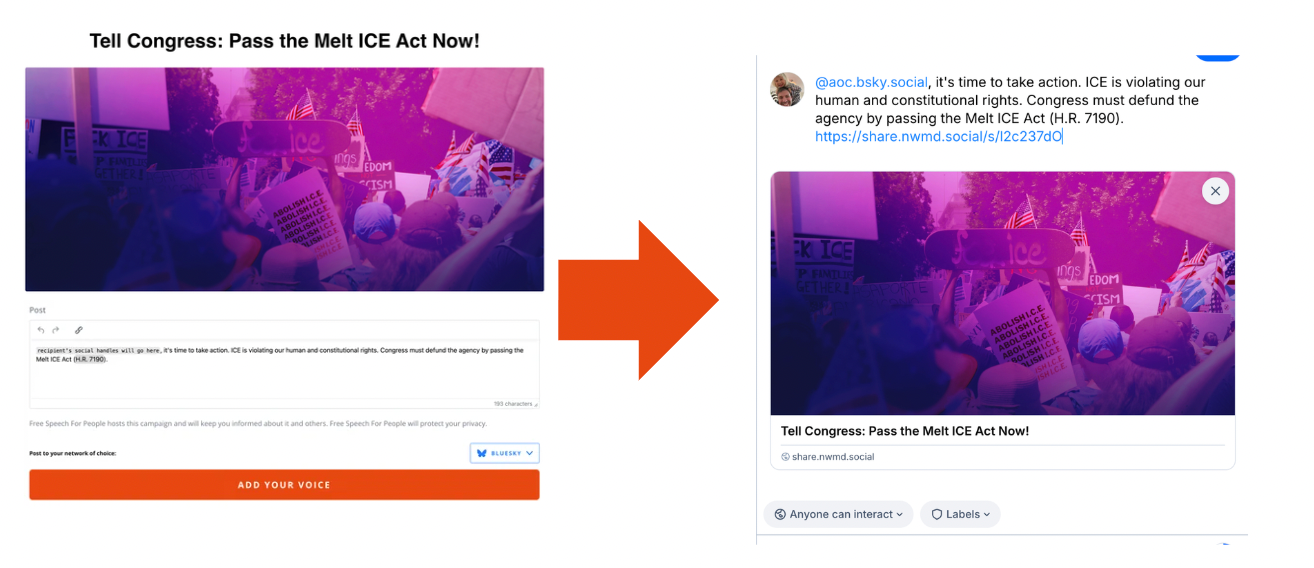
Free Speech For People is using Social Media Advocacy to push Congress to pass the MELT ICE Act, a campaign focused on ending funding for immigration detention and monitoring programs and redirecting resources toward community-based services. Social Media Advocacy helps bring that demand directly into legislators’ public feeds and mentions.
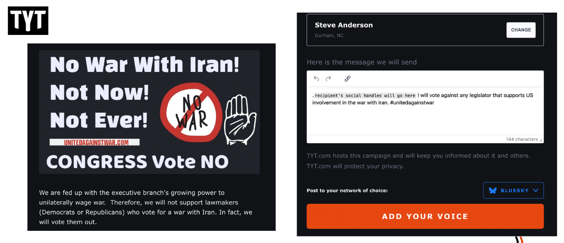
The Young Turks’ United Against War campaign is using the tactic to mobilize people opposed to U.S. involvement in the war with Iran. By combining social posts with direct advocacy, the campaign turns individual opposition into a public signal legislators and their teams can see.
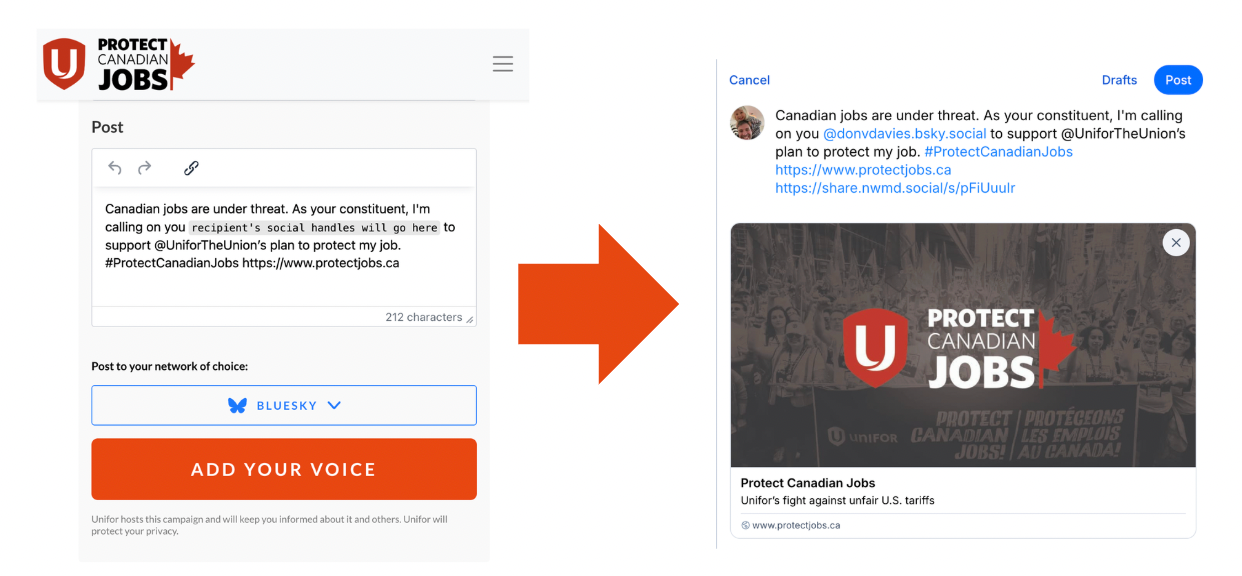
UNIFOR daisychained a Social Media Advocacy ask after an email, your rep's action was completed.
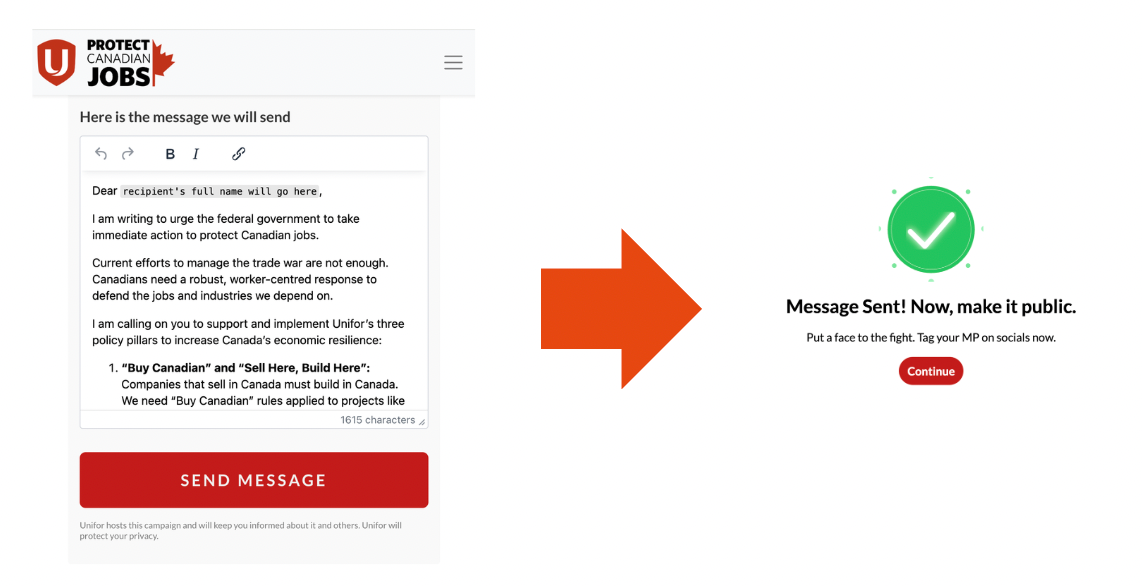
Then…
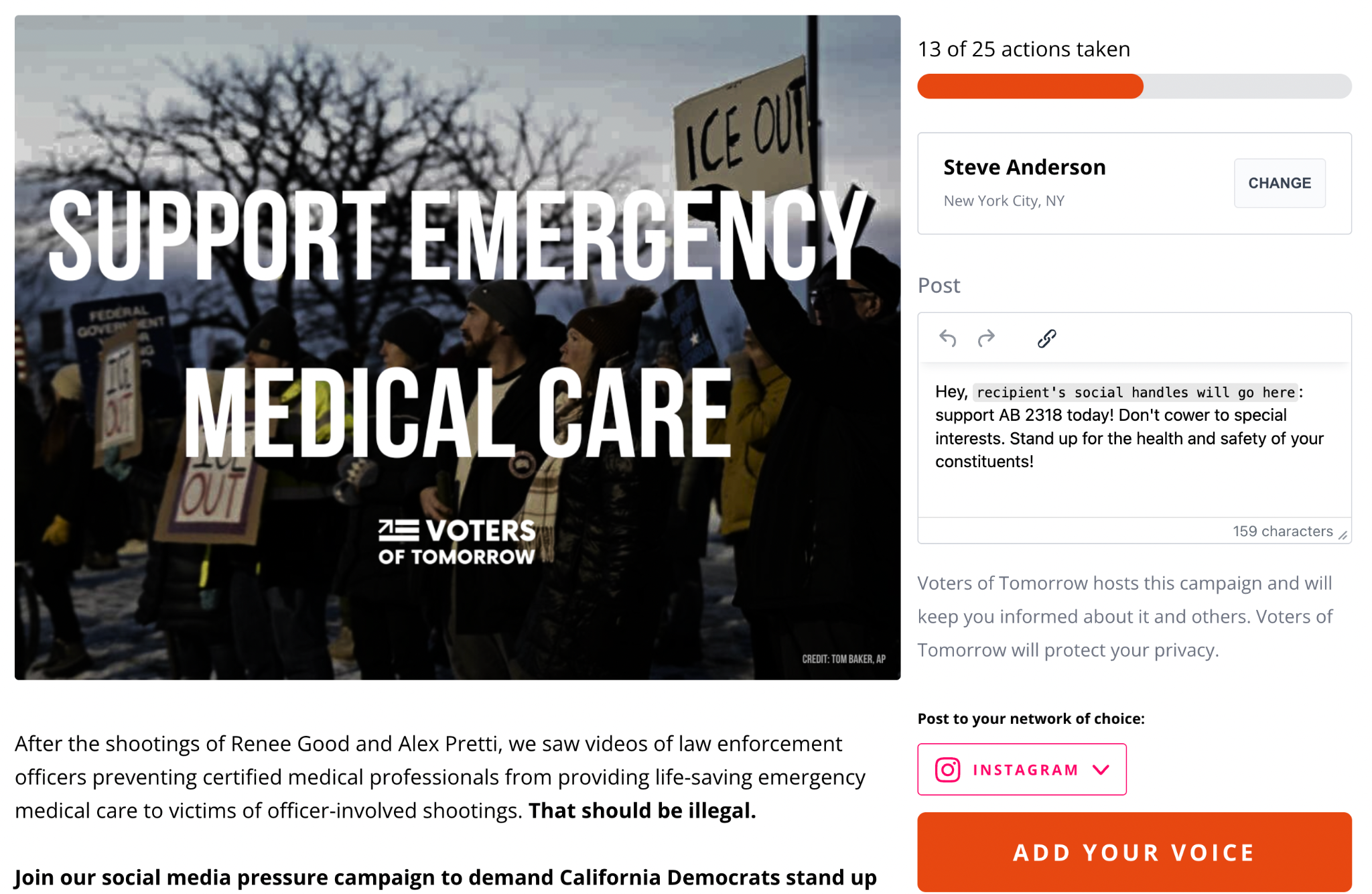
Voters of Tomorrow is using the tactic to mobilize young people around ending mass shootings and demanding action on gun violence. For a Gen Z-led movement, this matters. Their supporters are already organizing, communicating, and forming political identity online. Social Media Advocacy lets them turn that identity into public pressure.
Make the Road New York is using the tactic to push New York lawmakers to protect immigrant communities by limiting state and local cooperation with federal immigration enforcement. In this case, the public nature of the tactic helps show lawmakers that the demand is organized, visible, and politically relevant.
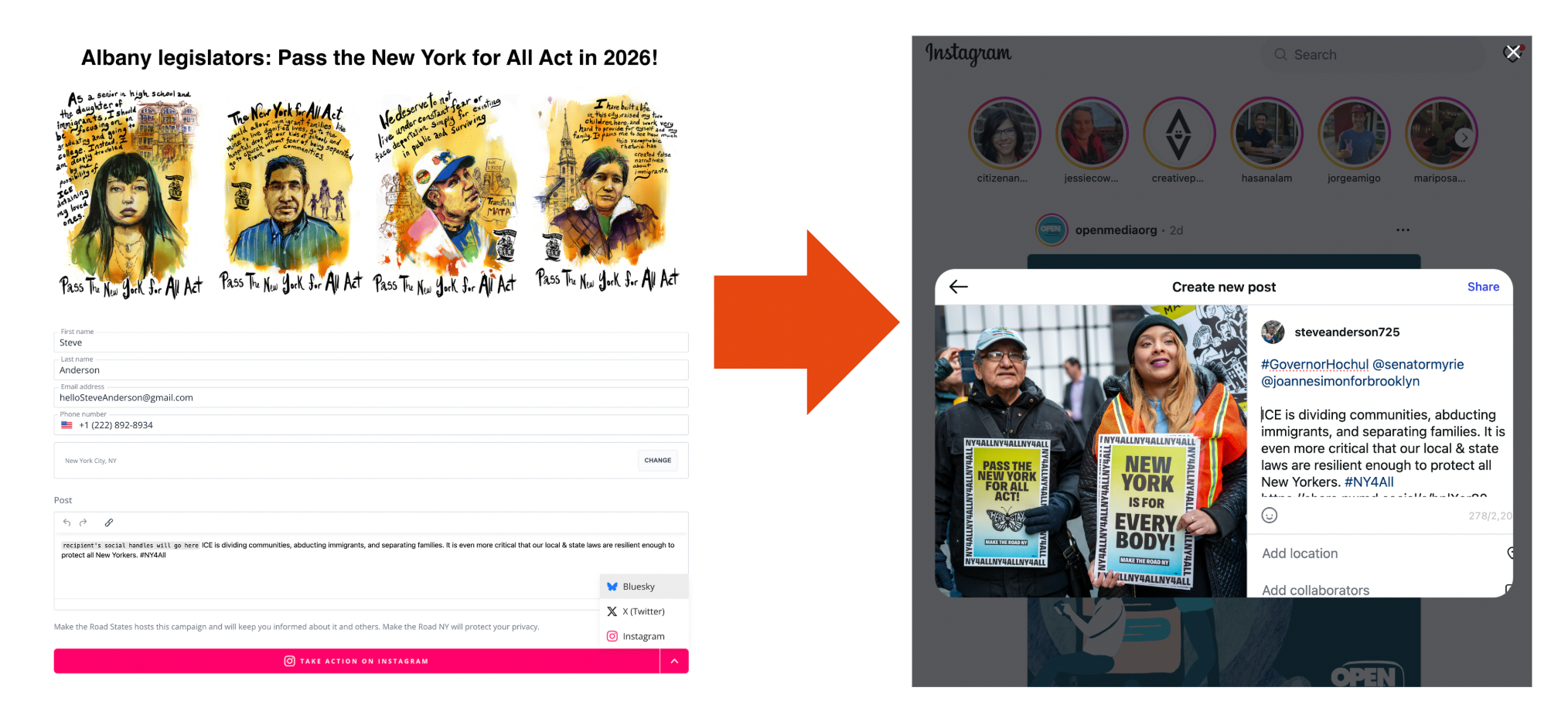
New/Mode’s Dual Notification system means that every post from the above campaigns also triggers email alerts to the targeted politicians. Supporters can tag representatives when direct handles are available, or use hashtags when tagging is not available. Every action is designed to be seen publicly and delivered directly.
The lesson is clear: visibility is power. When campaigns can turn each action into pressure, traffic, acquisition, and a deeper supporter identity, they are no longer just collecting messages.
They are building a flywheel.
Get started using social media advocacy with your next campaign by creating your free account.


Written by
Steve Anderson is the co-founder and chief strategist for New/Mode — a values-based platform that provides targeted online engagement tools. https://NewMode.net
More on social media from New/Mode Blog

More on social media from New/Mode Blog
More on social media from New/Mode Blog
